Common Financial Mistakes for Mechanics: A Workshop Profitability Checklist
20 September 2026 · 8 min read
Written by Daniel Staples — Director, MechanicX. Workshop operator and developer of MechanicX garage management software.
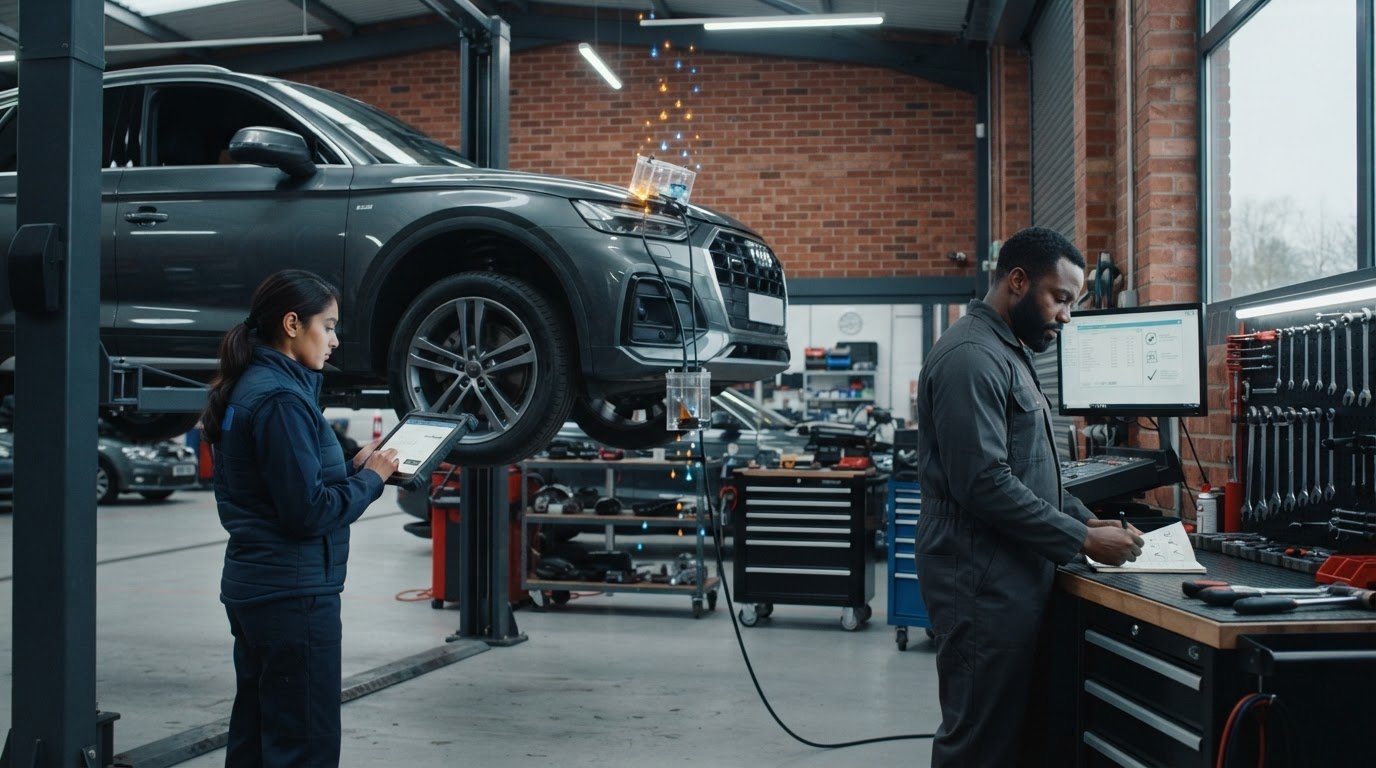
Did you know that workshops relying on paper job cards often lose up to three billable hours per ramp every single day? These common financial mistakes for mechanics are a gut-punch for any owner. You’re working flat out, yet the bank balance never quite reflects the effort you’ve put in. It’s easy to feel like you’re running to stand still when forgotten consumables and unrecorded diagnostic labour are quietly draining your margins.
We know you’d rather be under a bonnet than stuck at a desk. This guide shows you how to secure your business for 2026 by plugging profit leaks and professionalising your billing. You’ll learn how to automate admin and stay on the right side of HMRC’s Making Tax Digital rules before the April 2026 deadline. It’s time to stop the leak and get paid for every minute you spend on the tools.
Leaky Buckets: Identifying Hidden Operational Losses in Your Workshop
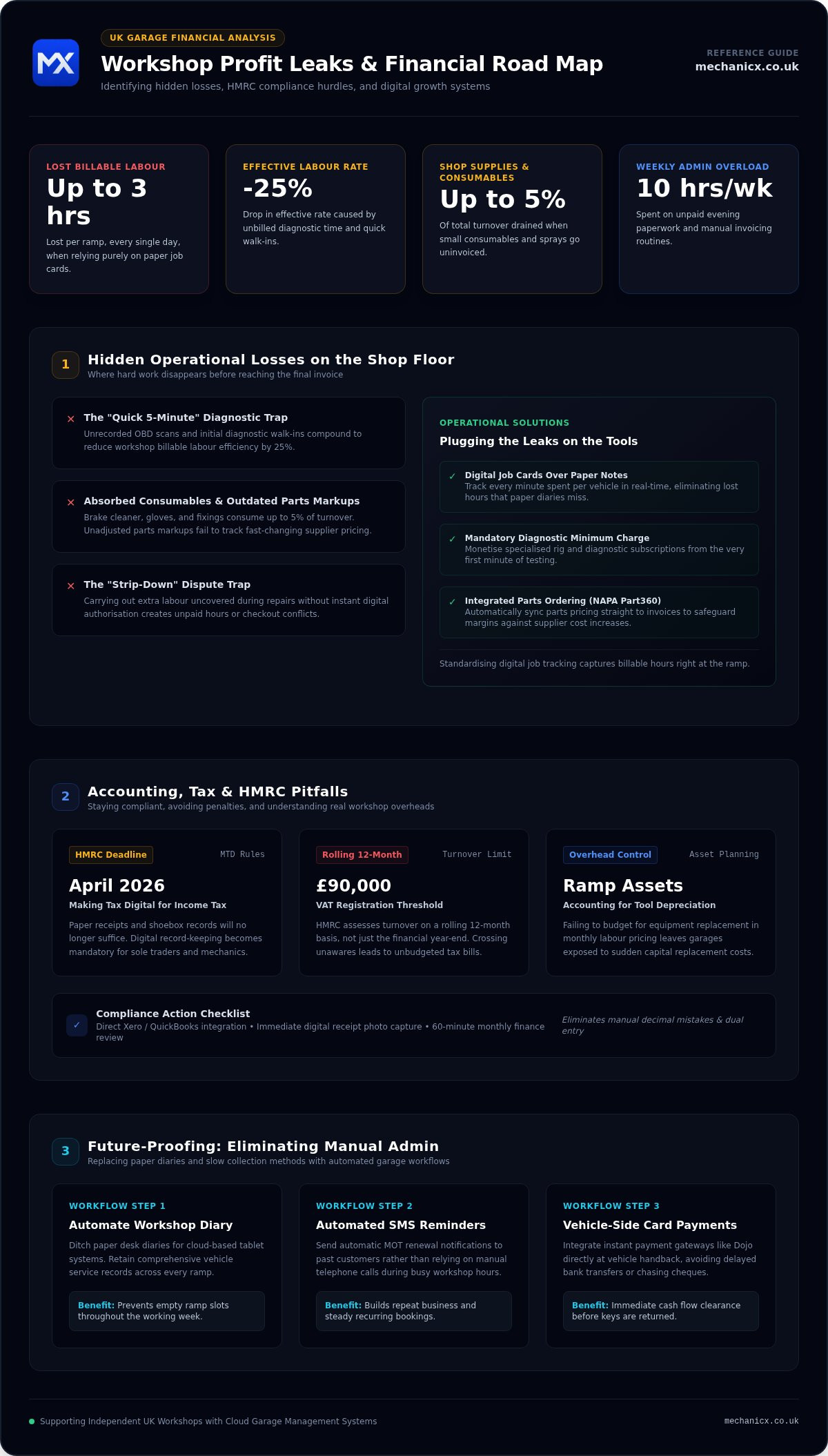
Workshop profit isn't just about how many cars you get through the door. It's about what you actually keep. Many common financial mistakes for mechanics start with "invisible" losses that happen right on the shop floor. Think about that "quick five-minute" OBD scan you didn't charge for. Industry audits show that unbilled diagnostic time and walk-ins can cause a 25% drop in your effective labour rate. That’s a massive hit to your bottom line for work you've already completed.
Then there are the consumables. A half-can of brake cleaner here, a pair of gloves there; it seems trivial. Yet, shop supplies can account for up to 5% of your total revenue. If you aren't invoicing for them, you're paying for the customer's repair out of your own pocket. The same applies to parts. Supplier prices change fast. If you aren't updating your markups in real-time, you're working on razor-thin margins. Finally, avoid the "strip-down" trap. If you find extra work and don't get digital approval immediately, you're either doing free labour or facing a dispute at the till.
The Checklist for Stopping Operational Profit Leaks
- Track every minute spent on a vehicle using digital job cards rather than paper notes. This captures real-time labour that paper diaries always miss.
- Implement a "minimum charge" policy for all diagnostic work. Your equipment and software subscriptions aren't free, so your expertise shouldn't be either.
- Integrate your parts ordering with your invoicing. Using NAPA Part360 ensures every nut and bolt is accounted for automatically, protecting your profit from supplier price hikes.
Accounting and Tax Pitfalls: Staying on the Right Side of HMRC
Running a workshop is physical work, but the biggest headaches often come from the paperwork. One of the most common financial mistakes for mechanics is treating the business bank account like a personal piggy bank. Buying a coffee or the weekly shop on the company card might seem small, but it creates a mess that your accountant will charge you extra to untangle. It also hides your true profit. If you don't know exactly what the business is spending, you can't price your labour correctly to cover your overheads.
VAT is another trap. HMRC looks at your turnover on a rolling 12-month basis, not just the tax year. If you hit that £90,000 threshold without a plan, you'll face a massive bill you haven't saved for. Manual data entry makes this worse. Transcribing figures from oily paper notes into a spreadsheet is a recipe for disaster. One misplaced decimal point can lead to an HMRC audit or a failed VAT return. You also need to account for depreciation. That expensive ramp or diagnostic rig is losing value every day. If you aren't "paying" for its eventual replacement in your monthly overheads, you'll be stuck with a huge capital expense you can't afford down the line.
Organising Your Financial Compliance
Staying compliant doesn't have to be a full-time job. With Making Tax Digital (MTD) rules for Income Tax arriving in April 2026, the old shoebox of receipts won't cut it anymore. You need a system that does the heavy lifting for you.
- Use a dedicated business bank account and link it directly to your garage management system via Xero or QuickBooks. This ensures every transaction is tracked in real-time without double-entry.
- Digitalise your receipts immediately whilst on the job. Snap a photo on your phone to ensure you claim every legitimate business expense before the paper gets lost or unreadable.
- Schedule monthly "finance hours". Spend sixty minutes reviewing your profit and loss. It’s better to spot a cash flow dip now than at the end of the tax year.
Modernising your back office with a tool like MechanicX makes these tax hurdles feel like a breeze rather than a burden.
Future-Proofing Failures: Why Manual Admin Stunts Your Growth
Manual admin isn't just a nuisance; it's a financial anchor. One of the most common financial mistakes for mechanics is failing to automate the workshop diary. If your ramps are empty on a Tuesday morning, it's usually because you didn't have the time to chase MOT renewals. Relying on customers to remember their own service dates is a gamble. Without a digital database, you lose that vital vehicle history, making it far harder to retain repeat business and build long-term trust.
Invoicing after hours is another major drain on your potential. Spending ten hours a week on evening paperwork means you're effectively working for free. It’s time you could spend resting or planning your next big move. Slow payment processing adds to the burden. If you're still waiting for bank transfers or handling cash, your cash flow is at risk. Offering instant card payments at the vehicle side is a simple fix. It’s professional, fast, and ensures the money is in your account before the customer drives away.
The Digital Transition Checklist for Busy Mechanics
- Ditch the paper diary for a cloud-based system accessible on workshop tablets. This keeps everyone organised, from the ramp to the front desk.
- Set up automated SMS reminders for MOTs. This ensures a steady stream of work without you having to make a single phone call during your busy day.
- Integrate payment processing like Dojo. Get paid the moment the keys are handed back to improve your cash flow instantly and stop the excuses about the cheque being in the post.
Stop the Leaks and Secure Your Workshop
You didn't start a garage to spend your life chasing receipts or guessing your profit margins. By identifying the common financial mistakes for mechanics, from unbilled diagnostic time to manual tax errors, you can finally reclaim your evenings and your earnings. The shift from paper to digital isn't just about modernising; it's about protecting every pound you work for on the shop floor. It’s time to stop guessing and start growing.
MechanicX is trusted by UK independent workshops to bridge the admin gap. With seamless Xero and QuickBooks integration and automated MOT reminders built-in, you can focus on the ramps while the system handles the back office. Stop leaking profit and start your free MechanicX trial today. Your business deserves to be as efficient as the vehicles you service. Let's get your workshop ready for 2026.
Frequently Asked Questions
What is the most common financial mistake independent garages make?
The most frequent error is failing to record every minute of labour and every consumable part used. This is one of the most common financial mistakes for mechanics, often referred to as "admin leak". Many workshops give away diagnostic time or small items like copper grease. These small omissions can eat up to 5% of your total revenue if they aren't invoiced correctly.
How can I track my workshop profit more accurately without an accountant?
You can track profit accurately by integrating your daily workshop activities with accounting software like Xero or QuickBooks. Using a cloud-based system like MechanicX allows you to see your profit and loss in real-time. By linking your digital job sheets directly to your accounts, you eliminate manual entry errors and can monitor overheads without needing to wait for an accountant's report.
Is garage management software worth the cost for a one-man mobile mechanic?
Absolutely, because it recovers the hours you currently lose to evening paperwork. For a mobile mechanic, generating professional invoices and taking payments at the vehicle side via Dojo integration is essential. It ensures you get paid instantly and keeps a digital history for every customer. This is far more professional and reliable than relying on a paper diary or memory.
How do I avoid a huge VAT bill at the end of the quarter?
You avoid surprises by tracking your turnover on a rolling 12-month basis and setting aside the VAT from every invoice immediately. Integrating your workshop system with a programme like Xero helps you see exactly what you owe HMRC at any time. This prevents a cash flow crisis, as you won't accidentally treat your VAT intake as spendable business profit.
Frequently Asked Questions
What is the most common financial mistake independent garages make?
The most frequent error is failing to record every minute of labour and every consumable part used. This is one of the most common financial mistakes for mechanics, often referred to as "admin leak". Many workshops give away diagnostic time or small items like copper grease. These small omissions can eat up to 5% of your total revenue if they aren't invoiced correctly.
How can I track my workshop profit more accurately without an accountant?
You can track profit accurately by integrating your daily workshop activities with accounting software like Xero or QuickBooks. Using a cloud-based system like MechanicX allows you to see your profit and loss in real-time. By linking your digital job sheets directly to your accounts, you eliminate manual entry errors and can monitor overheads without needing to wait for an accountant's report.
Is garage management software worth the cost for a one-man mobile mechanic?
Absolutely, because it recovers the hours you currently lose to evening paperwork. For a mobile mechanic, generating professional invoices and taking payments at the vehicle side via Dojo integration is essential. It ensures you get paid instantly and keeps a digital history for every customer. This is far more professional and reliable than relying on a paper diary or memory.
How do I avoid a huge VAT bill at the end of the quarter?
You avoid surprises by tracking your turnover on a rolling 12-month basis and setting aside the VAT from every invoice immediately. Integrating your workshop system with a programme like Xero helps you see exactly what you owe HMRC at any time. This prevents a cash flow crisis, as you won't accidentally treat your VAT intake as spendable business profit.
More articles



Try MechanicX free for 30 days
No card required. Set up in an afternoon and book tomorrow's jobs into it — that's the real test.